.png)
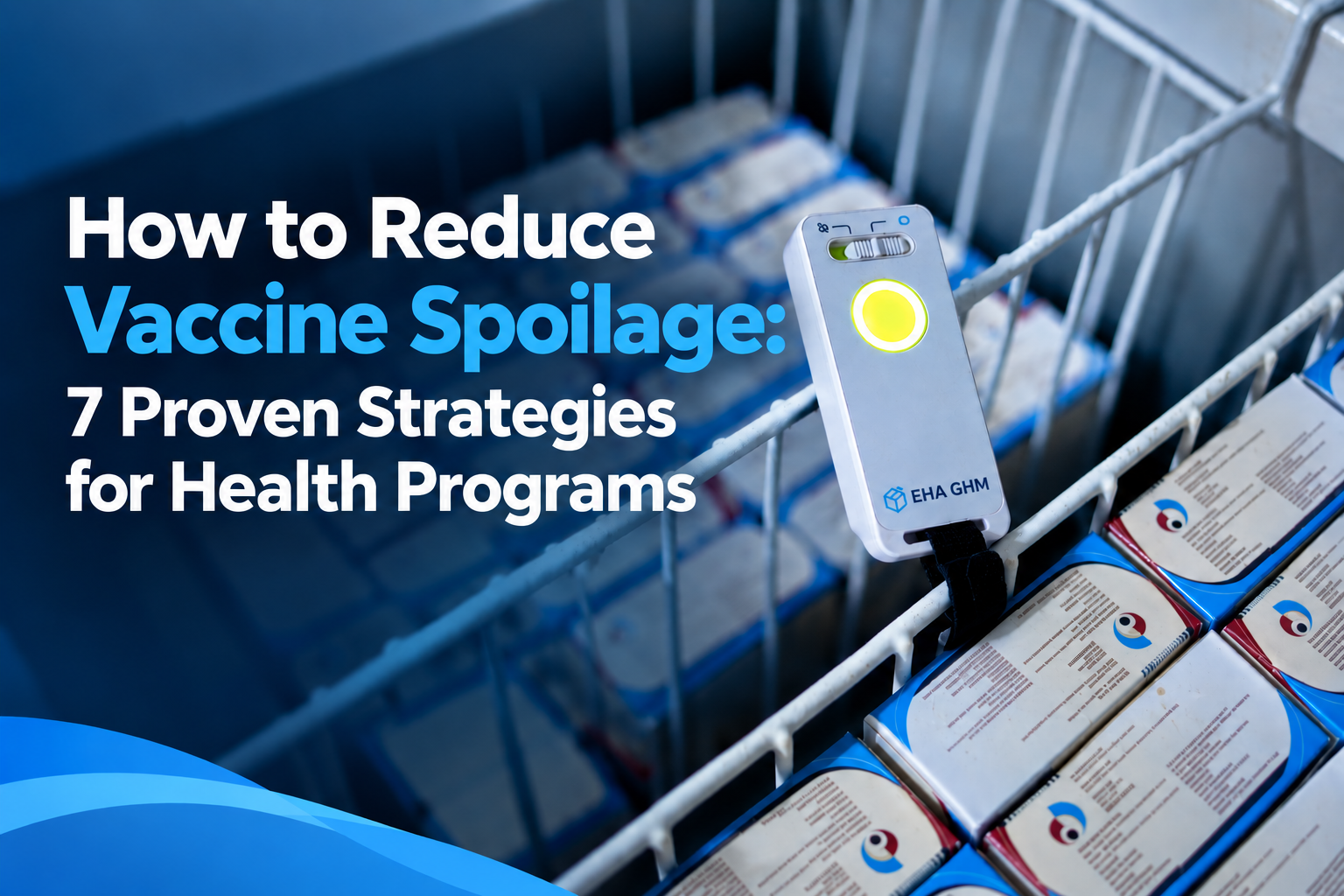
Every year, millions of vaccine doses never reach the arms they were meant for. Not because of shortages or funding gaps, but because of a single, preventable failure: a break in the cold chain. A refrigerator door left open too long. A truck without power for six hours on a bad road. A cold box that ran out of ice packs before the last mile was done.
The good news is that vaccine spoilage isn't a mystery, it's a measurable, solvable problem.
Health programs that treat cold chain management as a data problem, and not just a logistics problem, are already seeing dramatic results. Optimizing cold chain management, especially in the last mile, can reduce vaccine spoilage by nearly 40%.
Here's how the most effective programs are getting there.
The single biggest shift in cold chain management over the past decade is the move from manual, after-the-fact temperature logging to real-time monitoring. A paper logbook checked once a shift tells you a vaccine was compromised hours or days after it happened. A connected sensor tells you the moment a cold room drifts out of range, while there's still time to act.
Real-time visibility means health workers aren't inheriting risk from every unseen hand-off along the supply chain. They can trust the vaccine in front of them because the data trail behind it is complete.
Sensors are only as useful as the response they trigger. The programs that see the biggest reduction in wastage pair monitoring hardware with alert systems tuned to their specific risk points: freezing thresholds for freeze-sensitive vaccines, heat thresholds for tropical routes, and duration-based alerts that flag a slow drift before it becomes a full excursion.
Just as important: alerts need an owner. Build a clear escalation path on who gets notified first, who can act on it, and how fast they can so an alert doesn't sit unread in an inbox while doses spoil.
A surprising share of vaccine loss doesn't come from transport, it comes from equipment sitting still. Proactively identifying and replacing faulty refrigerators helps prevent accidental freezing, which alone can reduce vaccine loss by 24%. Freezing is especially dangerous because it's invisible without monitoring: a frozen vial often looks identical to a properly stored one.
Routine equipment audits, informed by historical temperature data rather than guesswork, let teams spot a refrigerator that's trending toward failure weeks before it actually breaks down.
Cold chain failures don't only happen in warehouses. Vaccines are most vulnerable in transit: on trucks navigating unpaved roads, in cold boxes during multi-hour handoffs, and in the "last mile" between the state’s store and a rural clinic. A monitoring strategy that only covers fixed storage and ignores transport leaves the riskiest leg of the journey unmeasured.
End-to-end monitoring from manufacturer to patient closes that gap and gives health programs a complete picture of where loss actually happens, not just where it's easiest to measure.
Many of the places where cold chain failures do the most damage are also the places with the least reliable internet or cellular coverage. A monitoring system that assumes constant connectivity will fail exactly where it's needed most. Look for solutions built to store and sync data through gaps in connectivity, so visibility doesn't disappear the moment a truck goes out of signal range.
A single temperature excursion is a fire to put out. A pattern of excursions is a system to fix. Programs that reduce spoilage most effectively don't just respond to individual alerts, they periodically review their data to spot recurring problems: a specific route that consistently runs hot, a piece of equipment that drifts every rainy season, a facility with a disproportionate share of incidents.
This is where monitoring pays for itself twice: once by catching individual failures, and again by informing smarter investment in the equipment and routes that need it.
Not all monitoring hardware is created equal, and for health programs procuring at scale, compliance isn't optional. Solutions that are WHO PQS pre-qualified and listed in the UNICEF Supply Catalogue have been vetted against global standards for accuracy, reliability, and field performance which matters both for procurement approval and for genuine confidence in the data.
Vaccine spoilage isn't inevitable, it's a visibility problem. Every dose lost to a silent temperature excursion represents a gap in the data, not just a gap in the cold chain. Health programs that close that gap, through real-time monitoring, proactive equipment management, and full-journey visibility, are proving that a 40% reduction in spoilage isn't an aspirational number. It's an achievable one.
What causes vaccine spoilage?
Vaccine spoilage is most commonly caused by temperature excursions which are periods where a vaccine is exposed to heat or cold outside its approved range. This happens due to equipment failure (faulty refrigerators or freezers), power outages, transport delays, human error (doors left open, ice packs not replaced), and gaps in monitoring that let a problem go unnoticed until it's too late.
How much does poor cold chain management cost health programs?
Beyond the direct cost of wasted doses, poor cold chain management drives indirect costs: emergency re-supply shipments, missed immunization targets, lost patient trust, and administrative time spent investigating incidents after the fact. Programs with real-time monitoring typically see both fewer incidents and lower total cost per dose delivered.
Can vaccine spoilage from freezing be prevented?
Yes. Freezing is one of the most preventable causes of vaccine loss because it's driven by identifiable equipment issues rather than random events. Proactively monitoring refrigerator performance and replacing units that show early signs of malfunction can reduce freeze-related vaccine loss by roughly 24%.
What is the difference between cold chain monitoring and cold chain management?
Cold chain monitoring refers to the technology and data collection such as sensors, alerts, and temperature logs used to track conditions in real time. Cold chain management is the broader set of processes, equipment choices, and decisions built on top of that data. Effective monitoring is what makes effective management possible.
Does cold chain monitoring work in areas with poor internet connectivity?
It can, if the technology is designed for it. Solutions built specifically for low-connectivity environments such as EHA GHM devices store temperature data locally and sync it once a connection is available, so visibility isn't lost when a truck or clinic goes offline. This is essential for rural and last-mile settings, where connectivity gaps are common.
What certifications should I look for in a cold chain monitoring solution?
For health programs procuring at scale, look for WHO PQS (Prequalification of Medical Devices) status and listing in the UNICEF Supply Catalogue. These certifications confirm the technology has been independently vetted for accuracy and reliability in real-world field conditions.
How quickly can real-time monitoring alerts prevent vaccine loss?
With real-time monitoring, alerts can reach the right person within minutes of a temperature excursion, compared to hours or days with manual logbook checks. That window is often the difference between a recoverable issue and a full batch of spoiled doses.